


While invented in New York City, I’ll give out the hottest take and say hip-hop was perfected in Los Angeles. Growing up in Vancouver, the West Coast sound had a massive influence. Even though we were Canadians living in the Pacific Northwest, if you play “California Love” at a club in Van City, the crowd will go apeshit. West Coast Hip-Hop has a unique fine and funky sound, which takes influence from a variety of elements including P-Funk, LA gang culture, wild parties in the Hills, and of course the most notorious and copious cannabis this side of the Rockies. As a hip-hop head, I have long been a fan of the West Coast scene and have a greater affinity for its artists, than those from NYC or Atlanta. So with all that said, I’d like to list my own personal choices for the top ten West Coast Hip-Hop albums of all time. Keep in mind these are my opinions, so if you got a different take, list off in the comments below. Enjoy!
10. Doris – Earl Sweatshirt (2013)
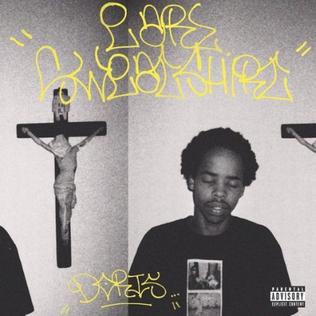
With a gritty underground sound and lyrics that befit someone far-older than the at the time nineteen years old rapper, Earl Sweatshirt’s debut studio album was refreshingly honest. A forbearer to the emo rap of the later 2010s, Earl’s album is unique in that it focuses on the rise of a young artist who became famous way too fast and doesn’t know how to take it all in. For those who need a refresher, when Earl debuted as a member of Odd Future in 2010, his music was (to say the least) highly controversial. Lyrics that focused on raping, murdering, and kidnapping young women were common fare for the then sixteen year old rapper, on his first mixtape. They revealed the immature and edgy rantings of a teenager trying to make a mark in a genre, that revels in tales of masculine bravado. But after a stay at a Samoan boarding school and time-away from the limelight, Earl came back a much more focused and emotionally aware artist. Earl’s new music dealt with mental health, loneliness, and the struggles of fame. Painfully honest and poignant, the album also was the last true Odd Future album, as songs such as “Chum” revealed a feeling of disconnect with his former collaborators. Doris represented the end of the Odd Future era of edginess and aggression, and the birthing of the later and far more conscientious careers of Earl, Tyler, Domo, and the rest of Odd Future’s artistic roster.
Best Songs: “Burgundy” (ft. Vince Staples), “Hive” (ft. Vince Staples and Casey Veggies), “Whoa” (ft. Tyler the Creator)
9. Oxymoron – ScHoolboy Q (2014)
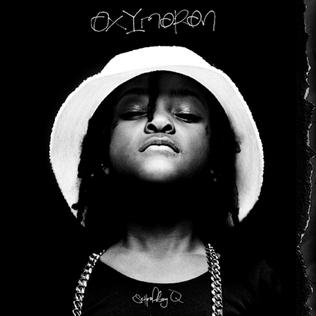
The sound of Schoolboy Q was best described to me by a musician friend as “a combination of the last inhalation of a crack pipe mixed with a crush of glass”. Yes that’s a very good thing. Q’s lyrics are raw, rough, and rugged, as befitting a man who spent most of his life keeping one-eye open at all times. Crack fiends, crooked cops, and opportunistic rivals, stalk the streets of Q’s world and he doesn’t beat around the bush about how his life was consumed by drugs. As a dealer and user, kush, crack, and eventually the titular Oxy, became not only a source of income but a way to dull the pain of living. The only thing that keeps Q going is the fatherly desire to provide for his daughter Joy. While the album is well-known for its classic party bangers like “Hell Of A Night”, “Man of the Year”, and “Collard Greens” (featuring an epic verse by TDE labelmate Kendrick Lamar), it’s the lesser known songs that shine through lyrically and thematically. “Hoover Street” provides a brutally honest recollection of how a young Q developed from a normal kid into a future d-boy, “Blind Threats” deals with the crisis and hypocrisy of faith as a gangster, while “Perscription/Oxymoron” describes the utter hell that is addiction to prescription pharmaceuticals. With this album, don’t just jump to the bangers. Take time and listen to everything. It’s worth it, trust me.
Best Songs: “Collard Greens” (ft. Kendrick Lamar), “Hoover Street”, “Break the Bank”
8. Straight Outta Compton – N.W.A. (1988)
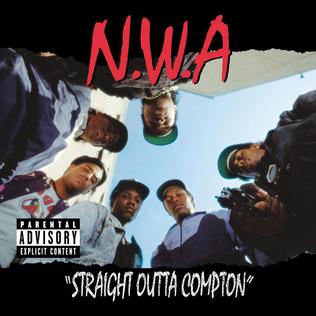
To avoid putting this album on the list some might say would be sacrilege. However I’m already doing that by not including a 2Pac album on my list according to some old heads (the dude was from Baltimore, fight me IRL). That said I have to admit, this album while dated in some aspects, remains a solid classic and a foundational document of West Coast Hip-Hop. N.W.A. gave us the honest and cold lyrics of Ice Cube, the gangsta bravado of Eazy-E, and the legendary production of my personal idol the one and only Dr. Dre. While it definitely was not the first gangsta rap album (Schooly D’s titular debut album takes that trophy in 1985), this was the album that popularized that specific subgenre of rap. Profane, poignant, and completely uninhibited, N.W.A. had no intention to hide behind the mask of respectability, and that is so much of what makes the album great. While obviously the titular song and other crime-filled romps like “Gangsta Gangsta” do make for good listening, it’s N.W.A’s more politically-charged songs which show the lyrical prowess of Ice Cube as a writer. “Fuck Tha Police” was a brutally honest (and desperately needed) protest song against police violence directed toward African-Americans, “Express Yourself” was an ironic profanity-free song designed to cleverly critique radio censorship, and “Dopeman” provided a cynical portrait of the effect of the crack epidemic on inner city neighbourhoods. It is undeniable that the album does have, at times, misogynistic and homophobic lyrics, but it needs to be understood in the context of the time it was made. The issues raised by this album are still relevant today and Kendrick Lamar himself has pointed out very little in Compton has changed since the album was released in ’88. For better or worse, Straight Outta Compton has stood the test of time because it’s an album that still remains relevant to the reality of too many of America’s most marginalized people.
Best Songs: “Express Yourself”, “Straight Outta Compton”, “Fuck Tha Police”
7. 2001 – Dr. Dre (1999)
While the title of the album is ironic due to the actual year it was released, 2001 like every Dre album is a certified classic. When it comes to structuring an album I’ve always felt, Dre treats each project like a widescreen epic. There’s a unifying vision in relation to production and once he figures out the basic album structure, he starts picking his cast members or guest artists to accompany him. With 2001 Dre brought aboard a host of West Coast rap legends including Kurupt, Nate Dogg, Xzibit, and of course the one only Snoop D-O-double-G. The other major guest appearance on the record was from Dre’s at-the-time protégé, Eminem, who further cemented himself as an artist to be reckoned with on songs like “Forgot About Dre” and “What’s The Difference”. Of all of Dre’s albums this one racks up the most notable array of singles including “Still D.R.E”, “The Watcher”, “Xxplosive”, and of course the unforgettable smokers’ classic “The Next Episode. Per-usual Dre’s production quality is excellent and 2001 is a certified G-Funk classic. That said lyrically this is Dre’s weakest effort. While Dre is first and foremost a producer, and has never been known to write his raps, the lyrics don’t go anywhere beyond typical gangsta bravado, misogynistic zingers, and smokers’ odes (except for the final song “The Message” dedicated to Dre’s dead brother Tyree, which seems very out-of-place considering the overall tone of the album). While 2001 might be Dre’s best known album, it remains my least favourite. That said Dre’s worst, would still rank in my top ten, and you’ll grow to understand why as you go down the list.
Best Songs: “Still D.R.E.” (ft. Snoop Dogg), “The Next Episode” (ft. Snoop Dogg), “What’s the Difference” (ft. Eminem & Xzibit)
6. To Pimp A Butterfly – Kendrick Lamar (2015)

To Pimp A Butterfly has received heaps of critical acclaim and when you listen to the album, it’s not hard to understand why. Hip-hop music has had a long, and completely unfair, history of derision by the American critical establishment. However, with Kendrick’s third studio album, hip-hop’s status as an important facet of American musical culture, could no longer be ignored. Kendrick’s album is also an undeniably black album. With an album cover displaying ghettoized African-Americans on the front lawn of the White House, the album states very clearly it’s intention to analyze the black experience in American life. Thus Kendrick incorporates elements of other African-American musical genres such as jazz, funk, soul, and spoken-word on the album. Thematic and tonal shifts on the album feel fluid and effective. Kendrick easily manages to move from aggressive assaults against institutional racism on “Blacker The Berry” to introspective tracks about his Christian faith on “How Much a Dollar Cost”. The underlying narrative of the album is also highly cohesive. Kendrick through spoken word style interludes, speaks of a crisis of conscience in his post-fame life. Survivor’s guilt, frustrations with inequality, and the price of success, are mulled over in an incredibly vulnerable and poignant fashion. Kendrick allows us to peak inside his soul and perfectly captures the sense of a man undergoing an existential crisis. While To Pimp A Butterfly isn’t my favourite album by K-Dot, it’s one that shall undeniably stand the test of time. It will inspire numerous essays and artistic critiques, and will forever have a paramount place in the American musical canon.
Best Songs: “King Kunta”, “These Walls” (ft. Bilal, Anna Wise, & Thundercat), “How Much a Dollar Cost” (ft. James Fauntleroy & Ronald Isley)
5. Flower Boy – Tyler, the Creator (2017)
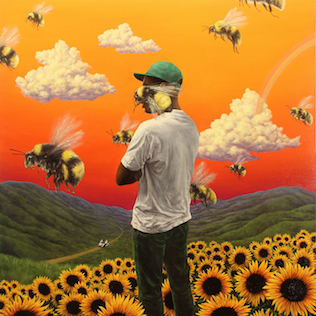
Tyler, the Creator holds a very special place in my heart. Much of my work as a writer and artist was inspired by his motto of “Find Your Wings”, and since hearing that song in 2015, I’ve tried to do just that. Tyler has himself tried to find his wings as an artist and truly cement his place as a musician worthy of mainstream as much as alternative respect. With Flower Boy he finally succeeded. A 2017 Grammy nominee for Best Rap Album, Tyler finally has his full creative footing on display with this artistic masterpiece. Combining elements of jazz and R&B, while Tyler ditches some of the more extreme vulgarities he’s stated in the past, he remains as pointedly honest as ever. Particularly we see him open up more about his sexuality. While Tyler has never stated exactly where he is on the sexual spectrum (despite innumerable rumors), it’s clear he isn’t afraid to be proud of homoerotic feelings he has felt. Songs like “Garden Shed” and “I Ain’t Got Time” while regarded as a coming-out moment by many critics, seem more-or-less an admission of something we all failed to see through his previous musical efforts. Tyler’s compositions and production are absolutely outstanding, and his raps are solid even if they lack a complex technicality. The features on the album are also appropriately varied and match-up to the many facets of Tyler’s personality. Tyler can easily exude bravado on one track with ASAP Rocky, while relishing in the nostalgically emotional on another with Kali Uchis. A true work of art, with this album Tyler has finally found his wings and it’s been absolutely riveting to watch him grow. And I for one can’t wait to see where he goes next!
Best Songs: “See You Again” (ft. Kali Uchis), “Boredom” (ft. Rex Orange County & Anna of the North), “911/Mr. Lonely” (ft. Frank Ocean & Steve Lacy)
4. The Chronic – Dr. Dre (1992)
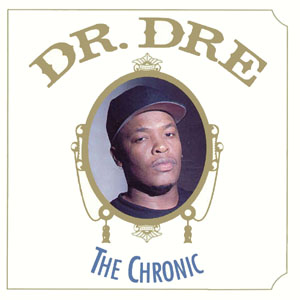
The album that put the “G” in G-Funk, The Chronic is one of the finest examples of hip-hop’s ’90s golden-era. The production quality of this album was revolutionary as Dre managed to capture the sonics of George Clinton, Zapp, and other funk forbearers, and distill them with a healthy dose of gangsta rap. Although the lyrics are aggressive, the rough edges are always smoothened out by the syrupy flow of funkiness. This was the debut also of the one and only Snoop Dogg (then with a Doggy in the middle), and his laconic drawl makes for some of the album’s finest moments. While he is Dre’s most important collaborator, RBX, Kurupt, and Lady of Rage also make important contributions on the album as well. While much like 2001, the album doesn’t thematically go very far, there are still remnants of the militant-nature of N.W.A. lodged in the albums. The song “The Day the N*ggaz Took Over” is a particularly powerful track focusing on the frustration many Black Americans felt in the aftermath of the Rodney King beating, while “Lil’ Ghetto Boy” serves as a lament to being born into the street life. The album is also notable for its humorous skits, particularly the classic and oft-repeated, “Deeez Nuuuts” prank call made by Warren G. A brilliant throwback to ’70s-era funk and an innovative and inspirational codex for many West Coast hip-hop stars, The Chronic remains a definitive classic which helped codify the West Coast sound.
Best Songs: “Let Me Ride” (ft. Snoop Dogg & Jewell), “Nuthin’ but a G Thang” (ft. Snoop Dogg), “Lil’ Ghetto Boy” (ft. Snoop Dogg & Daz Dillinger)
3. Good Kid, M.A.A.D City – Kendrick Lamar (2012)
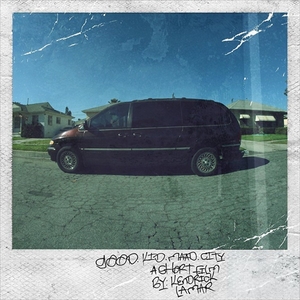
Many children of the nineties grew up off of Compton rap, but few grew up in that notorious Southern California suburb. For a young Kendrick Lamar, the streets depicted by artists like Ice Cube and Dr. Dre, were an everyday reality… and not the kind you would want to experience. With Kendrick’s second studio album, life in Compton was demystified and humanized. The senseless bloodshed caused by gang violence, the havoc wreaked by the crack epidemic, and many other issues of inner city life, were given a reality check. Kendrick doesn’t glorify the life of crime and violence, and depicts it rather as a mentally tortuous feeling of constantly being on the edge of death. Songs like “M.A.A.D City” and “The Art of Peer Pressure” ratchet up the tension and paint a frightening picture of events once reveled in by previous artists. The underlying truth of Compton, is that it’s a desperate place inhabited by people trying to get by, despite the insanity all around them. Kendrick manages to humanize everyone, from the girl selling her body on the corner to the professional shooters who don’t flinch at facing death. Rather than seeing them as the causation of their misery, he portrays them as the products of dismal circumstances and casualties of broken institutions. With this album Kendrick also managed to sell the religious to the secular. While I doubt mass conversions to Christianity were caused by this album, Kendrick manages to justify his Christian faith and make it understandable to even the most ardent atheist. As a mechanism for survival, Kendrick makes it clear how it saved him from what his mother called “a dark place of violence”. We may not agree with his beliefs, but we certainly understand why he has them. Short of living there (which I reckon few would want to do, if they had a choice), Good Kid M.A.A.D City serves as the most authentic depiction of one of hip-hop’s legendary locales.
Best Songs: “Bitch, Don’t Kill My Vibe”, “Money Trees” (ft. Jay Rock), “Compton” (ft. Dr. Dre)
2. Summertime ’06 – Vince Staples (2015)
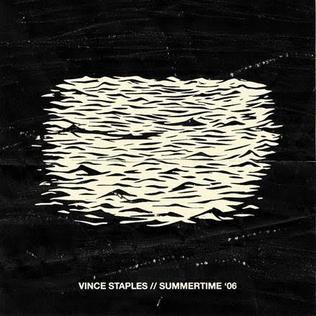
“Gangsta Rap”. “Realness”. Words like that are nothing but bullshit to Vince Staples. A truly deconstructionist album, Long Beach-native Vince Staples subverts the stereotypes and mythology of street life with his debut album. To create a double album is always bold, but to do so as your debut is a challenge. The fact that Vince Staples managed to create both a successful debut and double album, shows his natural affinity for music (even if based on interviews, that never was his goal in life). For those questioning Vince’s credentials, he is open from the get-go about being a Crip and gang member. It’s a part of his life and he’s lived everything artists like Dr. Dre and Ice Cube have talked about. And in his opinion: it’s all bullshit. Vince shows the street life as a bleak and brutal world, where one constantly walks a tightrope, that if you fall off, you could wind-up dead or in jail. There’s no rest for the wicked in Vince’s world and none of his stories have truly happy endings. That just doesn’t happen in North Side Long Beach (well except maybe in Vince’s own circumstances). This is the only rap album that actually made me honestly wonder, whether the artist had actually killed anybody. If I learned Vince had committed murder it wouldn’t surprise me, but I don’t know if I could judge him either. The life he lived was part of a series of cruel circumstances which he is open about. Vince does not beat around the bush about institutional racism, police brutality, and the inherent hypocrisies of the so-called “greatest country on Earth”. Vince and many of his fellow Crips are products of a broken system, which has failed many young men and women with potential. Vince got out and he knows how lucky he is. Too few ever get that chance and it makes an outsider wonder whether or not we should turn up to these songs.
Best Songs: “Lift Me Up”, “Norf Norf”, “Lemme Know” (ft. Jhene Aiko & DJ Dahi)
1. Compton – Dr. Dre (2015)
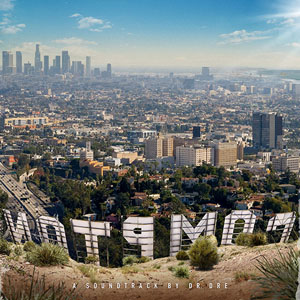
Compton is many things and all of them excellent. It’s the perfect hip-hop album. The perfect soundtrack. The perfect final project for a veteran artist. With this album, Dr. Dre has put together a masterpiece. While it is a companion to the biopic Straight Outta Compton which was released in the same year, Dre’s album manages to hold its own and carve out it’s own uniquely important place in West Coast hip-hop history. With this album Dre put forth is best production efforts yet. He manages to combine the old with the new and proves that age is not a barrier. Working with the best artists from the past and present, Dre gives us a superstar lineup consisting of Ice Cube, Eminem, Snoop Dogg, Kendrick Lamar, The Game, and countless other music legends. This is also Dre’s most introspective work, as he openly discusses his struggles to succeed and anger at a system which still disenfranchises young black men. Dre has some particularly powerful songs including “Animals” (with his latest protégé Anderson .Paak and East Coast legend DJ Premier) and “Darkside/Gone” (featuring posthumous vocals from Eazy-E). The whole album feels like a culmination of everything Dre has tried to execute both lyrically and production-wise since his career began in the 1980s. Finally he has succeeded and magnificently so. A true tour de force, Dr. Dre is exemplary of the kind of artist everyone should aspire to be.
Best Songs: “Genocide” (ft. Kendrick Lamar, Marsha Ambrosius, & Candice Pillay), “Animals” (ft. Anderson .Paak), “Loose Cannons” (ft. Xzibit, Cold 187um, & Sly Pyper)
P.S. And to appease the 2Pac stans here are my favourite ‘Pac songs: “Do For Love”, “California Love”, and “Keep Ya Head Up”
Categories: Uncategorized

 Tyler Knoll, Creative
Horrible list. The Chronic down at 4, Straight Outta Compton down at 8, no Doggystyle, no Death Certificate, no Amerikkka’s Most Wanted, no No One Can Do It Better, no All Eyez On Me…..You definitely gotta be new to this Hip Hop thing. I suggest some research