
Generation Kill and The Wire should be seen as two companion pieces that explore America’s decline both abroad and domestically.
In the year 2020, many observers of the socio-political sphere have diagnosed America as incurably fucked. COVID-19 has wreaked havoc on the American healthcare system and the response of the Trump administration has ranged from minimization to outright denial of a problem. Alongside COVID comes one of the worst recessions in the history of the world, which has already done as much if not more damage than the ’08 recession. Donald Trump and his cronies have done more than any other presidency in recent memory to destroy American credibility in both the mind of its foreign allies and adversaries, and the general public whose trust of institutions is at an all-time low. For many, the Trump presidency feels like a four-year nightmare and the commencement of everything going to absolute hell in America.
The problem is that’s incorrect. The diagnosis is legit, but the causation doesn’t lie with Trump, he’s merely the worst symptom of a collapse which started in the early 2000s.
The year 2000 feels very alien now, but it was a time of optimism. At least that’s what I’m told and what I’ve seen from archival media footage, as I was only five-years old at the time and was still trying to process the greatness (or at least what my tiny mind thought was greatness) of Star Wars Episode I: The Phantom Menace. My memory of the early 2000s up until the Obama presidency is pretty hazy, but what I do remember was that once we entered 2001 and more specifically once we experienced that tragedy that was 9/11, the decade took a much darker turn. Although I didn’t have an amazing understanding of what was going on, I realized that adults felt like they were going through crisis after crisis. 9/11 led to Afghanistan and the hunt for Bin Laden which led to the Invasion of Iraq which led to Abu Gharaib, and then Hurricane Katrina happened, and “oh fuck the housing bubble just burst”, and finally recession. That period when I was making the transition from middle school to high school, and Obama was entering the White House was when I really started to gain any semblance of political consciousness. I wasn’t all the way developed in my views yet, but I did realize that the promise of “hope and change” which the first African-American president represented, came out of a place of needing to find a kernel of optimism in what had otherwise been a pretty shit decade.
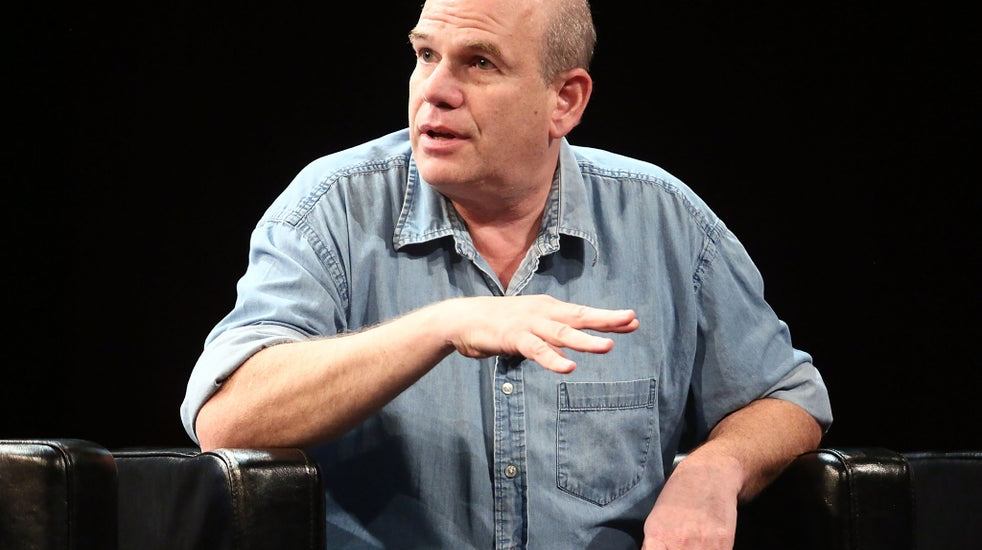
Now that I’m a “grown-ass man” and am in the middle of a whole new period of crisis, where American Empire truly feels at it’s death knell, I’ve felt the urge to go back and look at the early 2000s more critically as a decade. I wanted to know what happened, where and when everything went wrong, and who the key players in that decline were. I’ve looked at documentaries, YouTube video essays, and also the excellent podcast Blowback (I’m including a link to the Stitcher page for it because it really is that good a podcast: https://www.stitcher.com/podcast/blowback). However, one of the finest cultural resources for analyzing this critical decade in American decline has been the work of David Simon and his underappreciated writing partner Ed Burns (an ex-Baltimore cop and infantryman, who added a gritty on the ground realism to both series which I’ll be talking about). Specifically I am referring to two Simon helmed shows: The Wire and Generation Kill.
Simon and Burns were involved in the writing of both shows, and despite being set in two different worlds they provide critical analysis of American policy, one from the domestic angle and one from the foreign angle, in the early 2000s and how it was emblematic of a nation in decline both in its values and overall condition.
First let me give you a quick summary of both series.
The Wire is outwardly a crime drama series, but instead of having a person as the main character, the setting is the only real constant and protagonist we follow. That setting is the City of Baltimore. The choice of Baltimore as setting has a lot to do with the fact that David Simon cut his teeth on the crime beat as a reporter with The Baltimore Sun, but it’s also because the city’s sordid state and history symbolizes urban dysfunctionality in the USA. While it seems hard to believe now, Baltimore used to be one of America’s leading ports of entry for immigrants coming to the United States. It was a manufacturing hub for heavy industry, with Baltimore’s docks frequently shipping goods both off its docks and from railway cars to places far-and-wide. It once was a prosperous city, but there’s a key word in that: “once”. Outsourcing, restructuring, deindustrialization, and a shift to a low-wage service economy, have destroyed this once great center of American industry. While you’ve probably heard this story before in places like Detroit, Newark, and many a declining metropolis, Baltimore with its historic and multicultural heritage adds a sense of real tragedy and makes you feel like an elephant looking at the ivory tusks of a fellow brethren once past. The yearning of the residents for the city’s former glory is something you feel in your bones as the viewer. Each season of The Wire focuses on a different but similarly blighted institution of the city and America at large. The first season deals with the police, the second dockworkers, the third politicians, the fourth the education system and schools, and in the fifth and final the media. While the characters are fictional, almost all of them have a real-life allegory and are heavily rooted in the non-fiction works Simon wrote, Homicide: A Year on the Killing Streets and The Corner: A Year in the Life of an Inner-City Neighborhood (both of which had been adapted into TV series before The Wire was created). In many ways The Wire feels like the complete story Simon was trying to tell about Baltimore in his previous works, that he simply couldn’t have due to their constrained structure. With The Wire, Simon was given a semi-anthology structure by which he could analyze and pick apart these institutions, individually. But as much as he may have wanted to, one of those institutions which he couldn’t get an inside peek at was the military. That’s where Generation Kill comes in.
Generation Kill is an adaptation of a book written by Evan Wright a journalist who worked for Rolling Stone and was embedded with the 1st Recon Battalion of the United States Marine Corps during the 2003 Invasion of Iraq. Generation Kill is a brutally honest depiction of modern warfare and those who fight in it. The Marines of 1st Recon are to say the least “an interesting bunch”. Wright uniquely managed to gain a familiarity, which few journalists let alone civilians in general, would ever get with the Marine Corps’ “killer elite”. The men of 1st Recon are impossible to characterize because they represent such a broad cross-section of American society. While the majority do come from a working-class background, one of the coldest operators the aptly nicknamed “Iceman”, Sergeant Brad Colbert is an adoptee from a well-to-do upper middle class Jewish family. The Marines vary in personality, some are psychos and bigots, while others are at times compassionate and have remarkable self-awareness of the political realities of the situation they’ve just been ordered into. Almost all of them, share a common brotherhood and camaraderie, and a pride in being the best the Marine Corps has to offer. Their dark humor and the way the story is told in an almost “roadtrip via Humvee” manner, makes this a uniquely “honest” and “pertinent” take on the military bureaucracy and terrible decision making which created a clusterfuck which to this day has negatively impacted the centuries old civilization of Mesopotamia. Simon’s choice to adapt a work by someone who actually understands how the military works and has been in combat situations as opposed to making his own fictional story was an excellent choice, and the authenticity it brings pays off.
Neither The Wire or Generation Kill are intended to comfort the viewer. While they never dwell in grotesquerie, they also never lie to you. Dead little girls riddled with bullet wounds can be found in both shows, as can frank depictions of racism and hostile interactions between people from differing ethnic groups. Racism and violence two toxic ingredients baked into the American apple pie since birth are on full display, and Simon wants us to understand their consequences. In the case of Baltimore, we see a mostly black populace confined to ghettos which are in constant disrepair and where forms of legitimate employment are so hard to find that almost every young man turns into a “dope boy” only to wind up another casualty of the War On Drugs. In Iraq, we see young men from a vastly different culture coming as invaders into a situation and country which they barely understand and struggling to survive a war where “poor leadership” and “poor strategy” are in abundance.
Despite being told in both shows that America is on top of the world, we see that it’s anything but the case. Characters yearn for better times and more clear purposes. Stevedore Frank Sobotka in the second season of The Wire rightly criticizes the vulture capitalists who deindustrialized America only to outsource to parts abroad by stating “we used to build shit in this country”. In Generation Kill many of the Marines going into Iraq also served in Afghanistan, where they felt they had a clearer mission and believed they were doing something that mattered, as opposed to the Iraq War which has a flimsy premise and an ultimately catastrophic conclusion.
Bureaucrats inhabit both shows and their corruption both seen and unseen ranges from absurd to criminal. In The Wire we see this in the form of crooked politicians like Clay Davis and corrupt police officials like Ervin Burrell. In Generation Kill this takes the form of incompetent officers who are given derisive nicknames by their grunts like “Encino Man” and “Captain America”. Many of the characters who try to do the right thing in both shows, often find themselves more disillusioned than when they started. Bunny Colvin who tried to adopt a more liberal policy when it came to drug enforcement and bring about community policing in Baltimore, finds his efforts hamstrung by NIMBY public opinion polls and crooked police officials. He eventually is forced to quit the force and only later finds redemption in helping put Namond Brice on the right path. Back in Iraq, we have Sgt. Eric Kocher, an experienced and competent squad leader under the command of an incompetent officer nicknamed “Captain America” who got his position largely due to nepotism. Kocher tries his best to work under the command of a man who is utterly incapable of leadership in the face of combat, who often panics during low-intensity situations, fires at unmoving vehicles, and doesn’t hesitate to abuse prisoners of war. Eventually Kocher finds himself facing a court martial when he tries to stop his CO from abusing a POW but gets written up because a witness wrongly perceives him as taking part in the abuse. Kocher, despite his experience and skill, suffers under the command of an idiot and later has to face the consequences of actions which he tried to actively prevent.
These two shows contextualize the disasters of Bush-era domestic and foreign policy, by giving us real people living through them. But these shows never truly address the President himself because Simon realizes that these issues are bigger than the president and are largely systemic in nature. Simon cannot be accused of playing partisan in the show because he realizes all of these issues are built into America and not bugs or flaws created by “evil Republicans”. While the Bush administration exacerbated these issues, Simon knows that they were always there and simply needed the right people in office to make things that much worse.
David Simon is not a prophet, everything his shows present has been talked about through numerous non-fiction works before him. Simon instead gives us a tragic almost poetic elegy to this age of American imperial devastation. The false promise of America and the empire’s collapse have never been told better, and now I can finally understand the adult world of the early 2000s which I failed to comprehend in my childhood. 2020 might be the year that the empire finally collapses, but the first shockwaves hit in 2001 and we fooled ourselves into thinking that maybe we’d recover. If you get anything out of these shows, I hope you realize that it won’t get better and that it’s time to start thinking about a post-American world order.
Categories: Uncategorized

 Tyler Knoll, Creative
Recent Comments